Stormed toward me, his fury palpable, his face red and tense. His finger jabbed at the air in my direction as he shouted, “What do you think you’re doing?” The crowd growing around us mirrored the intensity of the moment.
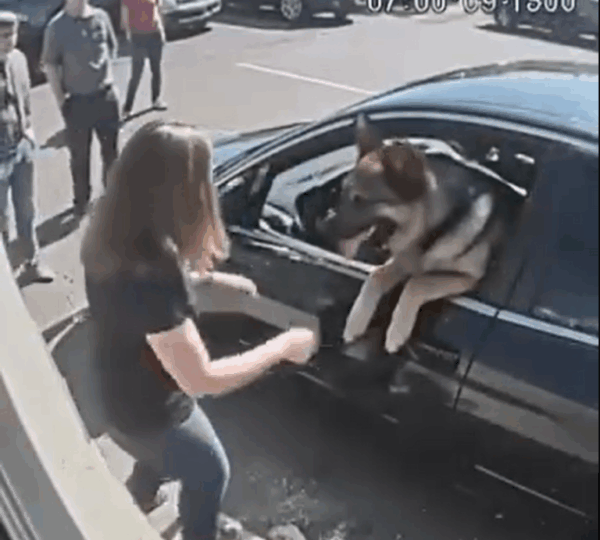
The summer sun beat down mercilessly, heat radiating off asphalt that shimmered under its weight. I held the German Shepherd close, feeling her ribs heave and her breathing rapid. Her distress was evident, her trust fragile in my arms.
I squared my shoulders, attempting to project calm and authority despite the tension thickening the air. “Your dog was in distress,” I said firmly. “You left her in a hot car.” My voice needed to cut through the chaos.
The man’s anger erupted like a sudden thunderstorm, words spilling over each other in a chaotic torrent. “You had no right to touch my car! I’m calling the cops. You’re going to pay for this!” His pride and rage intertwined dangerously.
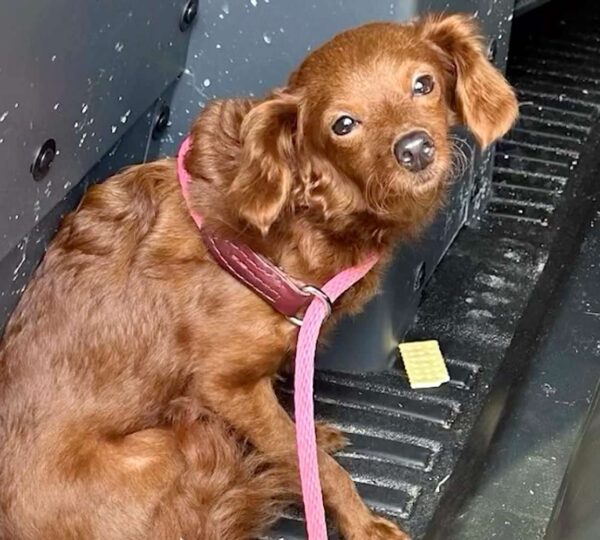
I tightened my grip on the dog, feeling the slight warmth of her fur as she leaned into me, seeking comfort. Her eyes met mine, and for a moment, fear melted into a fragile trust, a bond forged amidst crisis.
Out of the corner of my eye, a woman emerged from the crowd, her steps purposeful and confident. She held her phone in her hand, but instead of recording, she started dialing. “I’m calling animal control,” she declared firmly, unflinching.
Her declaration seemed to ignite the crowd’s conscience. Whispers rippled through the gathered bystanders, some nodding in agreement, others lifting their phones to record or call authorities themselves. The man’s bravado faltered as the social tide shifted against him.
Before he could react, a second woman stepped forward, holding a bottle of water with gentle care. She offered it to me quietly, eyes filled with compassion. “For the dog,” she said softly, her voice carrying kindness across the heated moment.
I nodded my thanks, unscrewing the cap and letting the German Shepherd lap at the water. Each sip seemed to revive her, her frantic panting slowing, her small body gradually relaxing in my arms as she regained composure and felt safer.
The tension in the parking lot was still present, but cracks were forming. Then, a young boy emerged, perhaps eight years old, tugging on the man’s shirt. “Daddy,” he said, voice small yet insistent, “you told me dogs are family. We shouldn’t leave family in the car.”
The man froze, his anger colliding with sudden shame. He glanced around at the crowd, noticing the disapproving expressions, and then down at his son, whose innocent eyes reflected truth more powerful than any confrontation.
His shoulders sagged, the storm of rage dissolving into quiet humility. “I… I didn’t think it was that hot,” he mumbled, voice subdued, almost ashamed. His gaze dropped to the ground, awareness of his mistake finally settling in with undeniable weight.
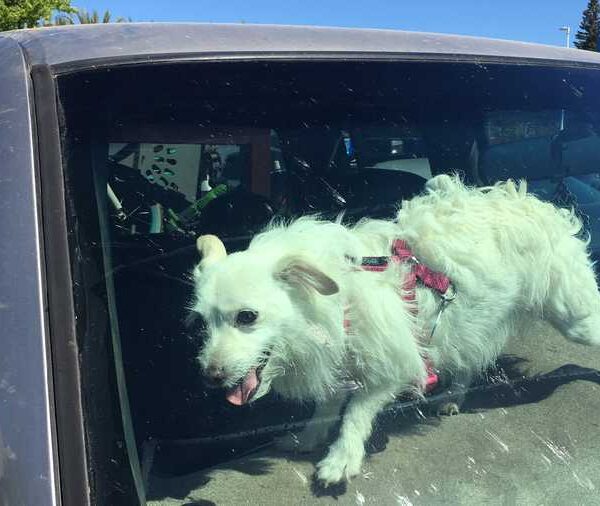
The boy looked up at him, a mix of disappointment and understanding in his eyes. “It’s okay, Daddy. We can make it right,” he said gently, offering an example of compassion that even the grown man could not ignore or argue against.
Slowly, the atmosphere in the lot began to change. The murmurs shifted from tension to relief as the collective awareness of the crowd solidified. The man’s demeanor softened, the fight leaving his posture, replaced by a quiet acceptance of accountability.
He turned toward me, his earlier hostility gone, replaced by a humbled sincerity. “Thank you,” he said, voice quieter but genuine, acknowledging both the rescue of his dog and the intervention of everyone around, including the small but decisive crowd.
Animal control arrived shortly thereafter, bringing a sense of official resolution. Officers quickly assessed the situation, checked over the German Shepherd, and confirmed she was unharmed. Their professional presence helped cement the lessons learned in the heated exchange.
The man and his son were cooperative, expressing sincere apologies and promising to take extra precautions in the future. The father’s gratitude was evident, his voice reflective and careful, as if each word acknowledged a deeper understanding of responsibility.
As I watched them leave, dog now calm and safe, the crowd gradually dispersed. Yet, the feeling lingered — a sense of collective accomplishment, proof that community intervention can prevent harm and affirm the importance of caring for vulnerable beings.
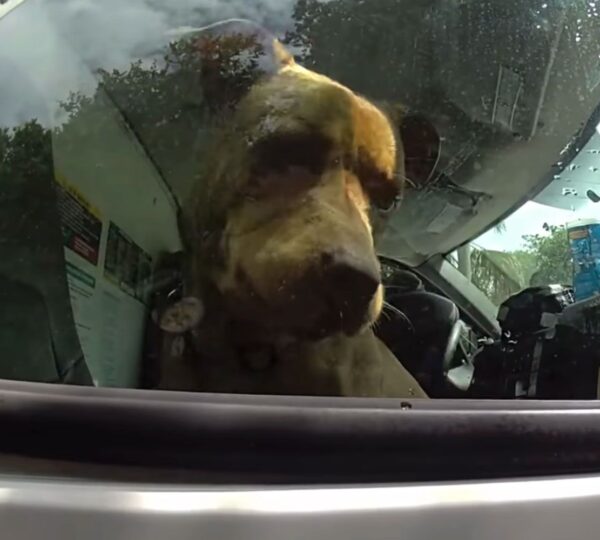
I realized that, in that moment, the situation had transcended a single act of intervention. It had become an exercise in empathy, courage, and communal accountability, showing the power of people coming together to protect those who cannot speak for themselves.
The dog, now resting comfortably, leaned against me for a few last moments before being reunited with her father. Her calmness reflected the reassurance and attention she had received, a testament to the difference a few decisive actions can make.
The crowd’s response had been remarkable. Strangers had stepped in, asserting moral clarity where it was needed, demonstrating that when a community chooses action over indifference, even the most volatile situations can be resolved peacefully.
Throughout the incident, the little boy had been a beacon of reason and morality. His words reminded the adults that sometimes truth is simplest when spoken without malice, and that accountability often begins with those willing to speak honestly.
As the parking lot emptied and the day wore on, I reflected on how small interventions ripple outward. One person’s courage had prompted a collective response, and the presence of empathy had altered behavior, reinforcing the idea that caring is contagious.
This incident also highlighted the vital importance of awareness about animal safety. Hot cars pose an extreme risk, and education coupled with community action can prevent harm and teach lessons that last a lifetime for both children and adults.
The father’s transformation during the event was striking. Anger had given way to responsibility, shame to understanding, and confrontation to collaboration. Observing this shift reminded me that exposure to accountability and compassion often prompts the most meaningful personal growth.
I thought about the dog’s perspective, her trust having shifted from fear to calm. Animals are acutely aware of human emotion, responding to safety and security. My presence, combined with the crowd’s support, demonstrated that collective care can profoundly impact those who cannot advocate for themselves.
Later, as I walked away, the echoes of the incident remained. The parking lot, once tense and stifling, now seemed infused with a quiet sense of hope. Small actions, guided by empathy, had created a ripple effect far beyond the immediate moment.
This encounter was also a reminder that public accountability matters. When bystanders take action responsibly, they reinforce societal values of empathy, respect, and care for all beings, human and animal alike, strengthening the moral fabric of the community.
In reflecting further, I realized that moments like these are rarely just about immediate outcomes. They are also about planting seeds of awareness, influencing future choices, and inspiring lessons in responsibility that extend to children, adults, and even entire communities.
The father, leaving with his son and the dog, carried with him more than gratitude. He now had a lived experience of accountability, witnessed by a public audience, underscoring the impact of immediate intervention and the necessity of mindfulness in daily life.
It was clear that human connection, when paired with moral courage, can transform potentially tragic situations into opportunities for growth, reflection, and communal support, providing lessons that resonate long after the immediate danger has passed.
The crowd’s participation reinforced a valuable truth: change is not imposed, it is collaborative. When individuals step forward, the shared ethical conscience of a community is activated, demonstrating that ordinary people can make extraordinary differences.
Ultimately, the event illustrated that small, deliberate actions — offering water, calling authorities, or speaking truth to power — collectively create safety, compassion, and accountability, protecting the vulnerable and modeling behavior for future generations.
And so, as I left the parking lot that day, dog safe and calm, crowd dispersed, and father humbled, I knew something vital had occurred. It wasn’t merely a rescue; it was a lesson in human empathy, responsibility, and community action.
Even minor interventions, when guided by conscience and courage, can ripple outward, shaping attitudes, behaviors, and moral understanding. The parking lot had been a classroom in real-time, teaching lessons about kindness, accountability, and the importance of action.
By the time I drove away, the sun lowering in the sky, I reflected on the extraordinary chain of events. What began as a tense confrontation evolved into a shared moment of understanding, compassion, and communal responsibility, leaving lasting impressions on all involved.
In the end, the day’s lessons were clear: indifference has consequences, and courage, even from strangers, can prevent harm and model morality. The dog’s safety was the tangible outcome, but the invisible impact on hearts and minds was equally significant.
Moments like these are rarely forgotten. They remind us that community action, moral courage, and compassion for the voiceless define us as humans. The choices we make in these moments reverberate far beyond their immediate circumstances.
And sometimes, the unexpected — a child speaking truth, strangers offering aid — is exactly what is needed to change hearts, shift perspectives, and foster lasting accountability in both adults and the community as a whole.