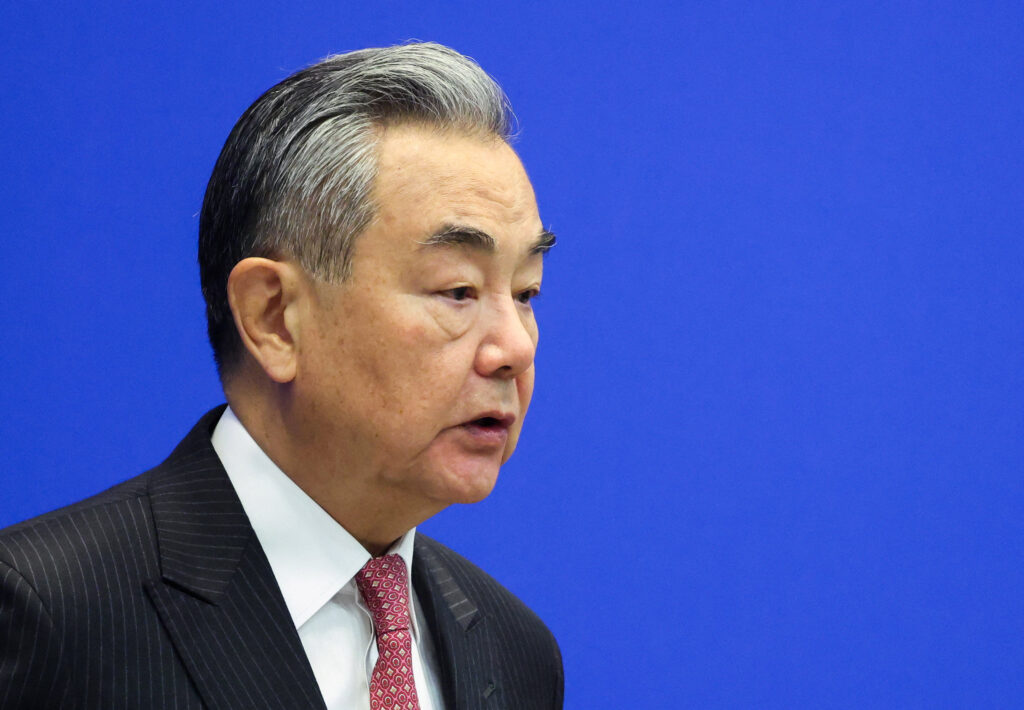
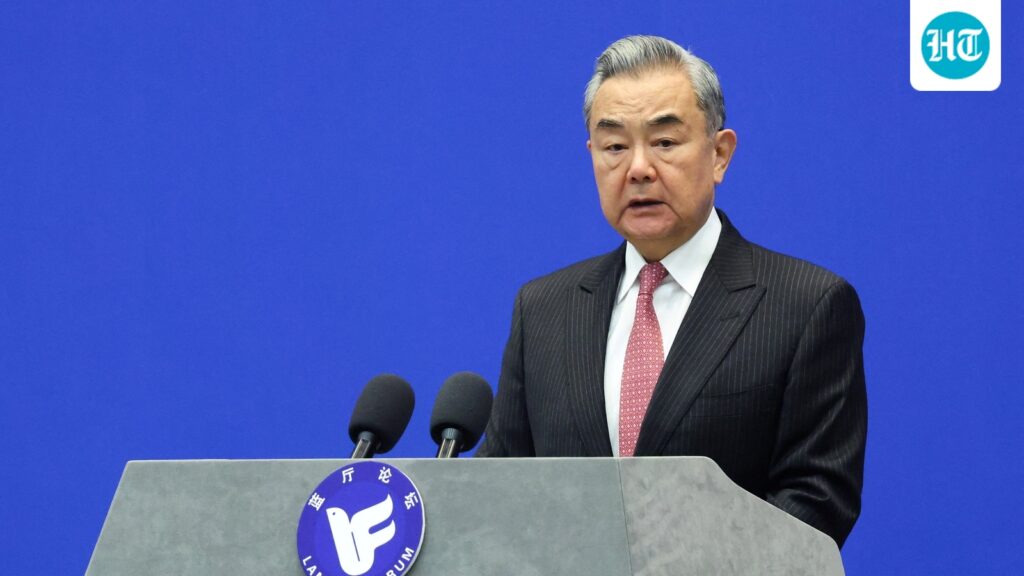
The warning landed abruptly, thrusting global tensions into sharper focus. China’s Ministry of Foreign Affairs publicly demanded that the United States.
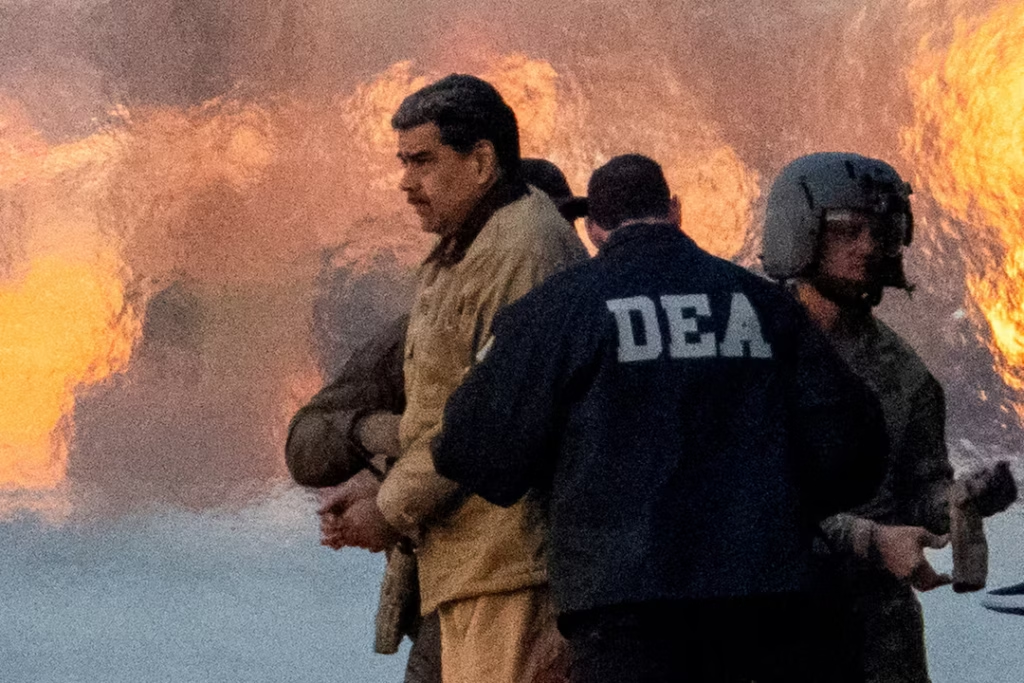
Release Venezuelan President Nicolás Maduro from U.S. custody, issuing its statement just hours before Maduro’s highly anticipated court appearance in New York.
The Chinese denunciation was unequivocal, framing Washington’s actions as a violation of international law, Venezuelan sovereignty, and the foundational principles of the United Nations Charter.
China’s call went beyond mere diplomatic rhetoric; it was a calculated challenge to U.S. authority, asserting that no nation should place its domestic legal procedures above established global norms.
At the same time, President Donald Trump intensified tensions in a very different direction. During remarks to reporters on Air Force One, he disparaged Colombia’s president, Gustavo Petro, describing him as “very sick” and asserting that Petro “likes making cocaine and selling it to the United States.”
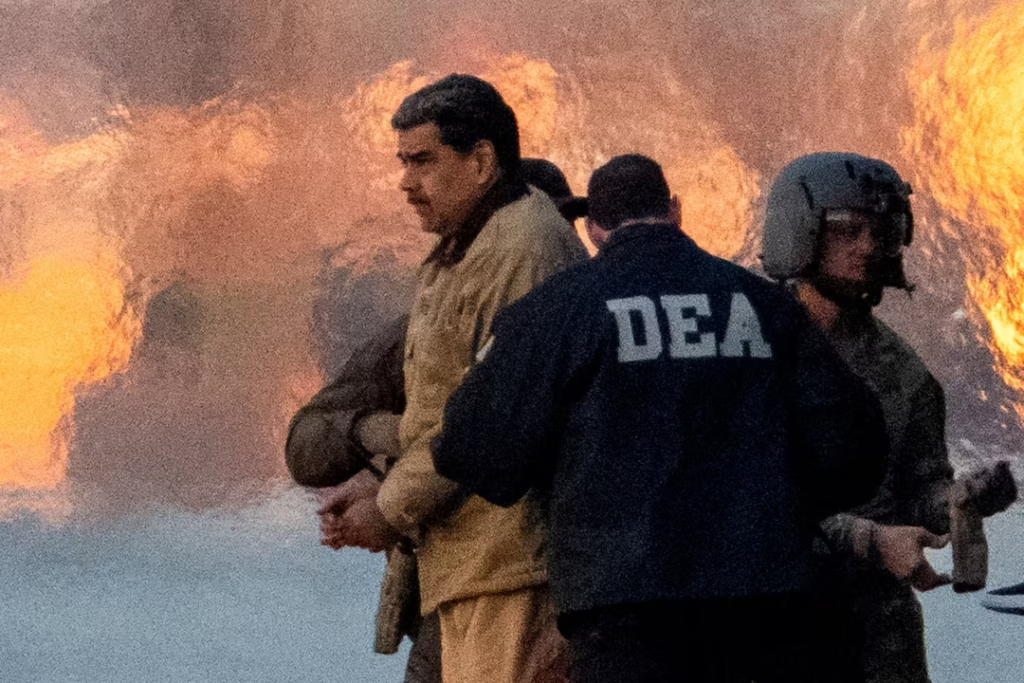
When asked whether similar military action could be contemplated against Colombia, Trump responded, “It sounds good to me.”
Taken together, China’s demand and Trump’s rhetoric signaled not just discrete diplomatic moments, but a broader pattern of geopolitical strain. What emerged was a sense of instability — fractured alliances, heightened brinkmanship, and a growing worry among global leaders that a single miscalculation could ignite a far larger confrontation.
China’s Strategic Pushback
China’s position was forceful and public. In a statement released through its foreign ministry spokesperson, Beijing insisted that the United States has “disregarded President Maduro’s status as head of state” and accused Washington of trampling the sovereignty of Venezuela by detaining its president and prosecuting him in a domestic U.S. court.
According to China, failing to respect international law “seriously destabilizes international relations” and sets a dangerous precedent for future global interactions.
China’s stance reflects Beijing’s broader diplomatic strategy. Over recent years, China has cultivated close political and economic ties with Venezuela, including major agreements on oil exports and infrastructure development.
Chinese officials have repeatedly stated their opposition to “interference in Venezuela’s internal affairs” under any pretext — a position grounded in Beijing’s own policy of non‑intervention and its strategic interest in maintaining influence in the Western Hemisphere.
For Beijing, the demand for Maduro’s release was not just a defense of a geopolitical partner but also a test of China’s ability to assert itself on the world stage.
Confronting the United States diplomatically over Venezuela — a region long considered within Washington’s sphere of influence — reflects China’s desire to counterbalance American power in global crisis resolution.
Trump’s Rhetoric and Regional Unease
While China’s statement came in measured diplomatic language, President Trump’s comments about Colombia’s government were striking for their bluntness and tone.
Referring to Colombia’s elected president as “a very sick man,” Trump suggested not only disapproval, but implicitly questioned Petro’s ability to lead.
Trump’s statements went beyond customary diplomatic critique and veered into language that many regional observers perceived as threatening and interventionist.
For Colombians and neighboring governments, Trump’s remarks revived long‑standing anxieties about U.S. influence in Latin America.
Historically, the United States has intervened — diplomatically and militarily — in the region, and many governments remain sensitive to any suggestion that Washington could again wield its power with little regard for sovereignty.
In this context, even rhetorical threats are viewed as destabilizing, especially when delivered amid an ongoing crisis involving a neighboring country.
A Broader Pattern of Strain
Taken together, China’s public challenge and Trump’s controversial comments underscored a shifting global landscape. On one front, China appears more willing to confront U.S. policy directly, using diplomatic platforms to push back against what it views as unilateral action.
On another front, the United States — under Trump’s leadership — has adopted assertive language that some foreign governments interpret as casual or destabilizing interference.
This tension has not been confined to Venezuela and Colombia alone. The broader crisis has raised questions about the future of international diplomacy, the role of great powers in enforcing — or disregarding — international norms, and the fragility of alliances in a world where competing interests frequently collide.
China’s criticism of the U.S. move comes at a moment when diplomatic relations between Beijing and Washington are already under strain over issues like trade, technology competition, Taiwan, and military presence in the South China Sea and Indo‑Pacific region.
China’s public defense of Maduro — framed as an appeal for adherence to international law and respect for sovereignty — reflects its strategic priority of positioning itself as a counterweight to U.S.-led foreign policy initiatives.
At the same time, Trump’s language about Colombia has alarmed diplomats who fear that casual rhetoric about military intervention or regime change can undermine fragile democratic institutions.
In regions where political tensions are high and stability is tenuous, even comments made in press briefings can ripple outward, affecting public perceptions, regional alliances, and long‑term cooperation.
What’s at Stake
The combined diplomatic shock of China’s formal demand and Trump’s provocative statements reveals far more than isolated incidents; it highlights larger questions about global power dynamics in the early 21st century. Key concerns include:
- Sovereignty vs. Intervention: How nations balance the principle of sovereignty with perceived needs to respond to alleged criminality or humanitarian crises.
- Great Power Competition: The extent to which China and the United States are willing to confront each other in global arenas once dominated by U.S. influence.
- Regional Stability: The impact of superpower tensions on Latin American politics, especially where domestic challenges already complicate governance and economic recovery.
These issues are not theoretical; they affect real diplomatic relationships, trade negotiations, security collaborations, and the everyday lives of millions of people across regions that are watching these developments closely.
The shockwaves from China’s demand and Trump’s rhetoric did not remain in the diplomatic corridors of Washington and Beijing. Latin American capitals, already grappling with the destabilizing effects of Venezuela’s crisis, faced new uncertainties.
Governments in Bogotá, Brasília, Lima, and Mexico City had to reassess security strategies, foreign policy priorities, and public messaging in light of the dual pressures: the U.S. potentially asserting its influence militarily and China positioning itself as a defender of Venezuelan sovereignty.
In Colombia, the president’s office responded cautiously, emphasizing sovereignty and self-determination while reiterating ongoing collaboration with the United States on counternarcotics and economic initiatives.
Petro’s government highlighted the importance of measured diplomacy, noting that reckless rhetoric could inflame domestic political tensions and regional instability.
Local analysts observed that Trump’s comments, though framed as offhand criticism, carried historical echoes of U.S. interventions in Colombia and neighboring nations during the Cold War and post-Cold War periods, periods remembered in Latin America as moments when external interference exacerbated conflict rather than resolving it.
The situation also drew attention to the role of multilateral organizations. The Organization of American States (OAS) called for immediate dialogue and restraint, emphasizing the principles of sovereignty, non-intervention, and the peaceful resolution of disputes.
The United Nations similarly underscored the importance of adhering to international law, warning that unilateral actions or inflammatory statements by powerful states could rapidly escalate tensions, not only in Venezuela but across the hemisphere.
China, meanwhile, strengthened its messaging through both public statements and diplomatic channels. By linking itself explicitly to Maduro’s protection, Beijing signaled a willingness to confront the United States not only on traditional flashpoints such as trade and the South China Sea but directly within the Western Hemisphere.
Analysts describe this as a strategic test: China is measuring the U.S. response, assessing how far Washington will push its unilateral actions, and signaling to other nations that Beijing may act as a counterweight in global power dynamics.
This tense interplay illustrates the shrinking margin for error in contemporary international politics. With nuclear-armed powers, rising multipolar influence, and tightly interconnected economies, even a single miscalculated statement or tactical move can trigger cascading effects.
In Latin America, where economies are closely linked to both U.S. trade and Chinese investment, these pressures are immediate. Markets responded to the dual crises with heightened volatility, while investors monitored the flow of Venezuelan oil — a resource of immense geopolitical and economic importance.
Trump’s statements regarding U.S. access to Venezuelan oil were met with caution from economists and foreign policy experts alike, highlighting the complex intersection of energy security, legality, and diplomacy.
The human dimension remains equally critical. Venezuelans, already enduring years of economic hardship, political repression, and social instability, faced fresh uncertainty.
Reports from Caracas indicated heightened military presence, restricted movement, and temporary shortages of essential services. Regional humanitarian organizations issued urgent calls for calm, emphasizing that civilians must be protected even as political and military actors navigate this unprecedented situation.
Furthermore, the operation and its aftermath have implications for the credibility of U.S. foreign policy. Allies around the world are observing closely how Washington manages the balance between assertiveness and restraint. Unilateral actions, while demonstrating military capability, risk alienating traditional partners and eroding the influence of U.S.-led coalitions.
Diplomats stress that credibility in international relations is not solely determined by force projection but also by adherence to legal frameworks, respect for sovereignty, and consistent, predictable engagement with multilateral institutions.
In addition, Trump’s confrontational approach has had ripple effects on internal politics within the United States. Congressional leaders from both parties expressed concern over bypassing legislative oversight, while commentators debated the broader implications for executive authority and the precedent set for future military interventions.
Critics argue that such actions, absent thorough congressional consultation, risk undermining democratic accountability and increasing the likelihood of unintended consequences abroad.
Supporters counter that decisive leadership is sometimes necessary to protect national security and uphold the rule of law internationally.
Taken together, the events of this day underscore a new era in global politics — one in which power is contested openly, alliances are fluid, and communication, rhetoric, and perception are as consequential as military capability.
The simultaneous pressure from China and the provocative statements directed at Colombia illustrate the multidimensional challenges faced by U.S. policymakers: navigating competition with rising powers, managing regional partners, maintaining global credibility, and avoiding escalation into broader conflict.
The lessons extend beyond immediate diplomacy. International observers note that in a world of interdependent economies, complex security networks, and instant information flows, unilateral actions and aggressive rhetoric have outsized effects.
Decisions made in Washington resonate in Beijing, Bogotá, Caracas, and across global markets within hours. The era of delayed response and predictable patterns is over; the global stage now operates with heightened immediacy and magnified stakes.
Ultimately, these developments reveal more than isolated crises: they illuminate a pattern in which strategic interests, power dynamics, and rhetorical choices are inseparable.
China’s willingness to challenge U.S. authority, combined with Trump’s provocative posture toward Latin American leaders, creates a context in which missteps could rapidly escalate into broader conflict.
As scholars, diplomats, and regional leaders watch closely, the events of this day may serve as a blueprint for understanding power, risk, and influence in an increasingly multipolar and volatile world.
For policymakers and citizens alike, the implications are clear: international relations today require not only strategic planning and military capability but also nuanced diplomacy, careful communication, and a recognition that even seemingly symbolic statements can carry material consequences.
The delicate balance of power in the Western Hemisphere—and globally—demands vigilance, foresight, and restraint. One day, one statement, and one action can shift the course of nations, reminding the world that in contemporary geopolitics, the margin for error is slimmer than ever.