The warning was blunt—and it was broadcasted across national television networks, capturing the attention of policymakers, media, and the general public alike.
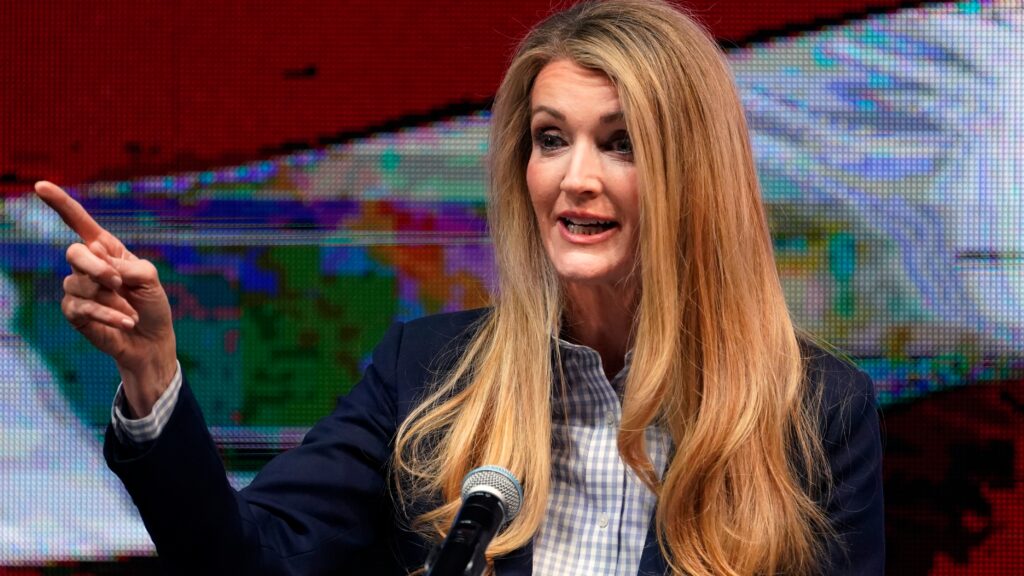
SBA Administrator Kelly Loeffler did not mince words when discussing the recent revelations out of Minnesota. Describing the billion-dollar fraud scandal as “just the tip of the iceberg.”
Loeffler signaled that the issues uncovered may represent only a fraction of a broader, systemic problem that could stretch across multiple states. The phrasing alone hinted at a looming cascade of discoveries, investigations, and prosecutions that might fundamentally challenge public confidence in government relief programs, particularly those implemented during the COVID-19 pandemic.
According to Loeffler, investigators acted swiftly to examine anomalies in Small Business Administration loans issued as part of pandemic relief efforts. These programs, including the Paycheck Protection Program (PPP) and Economic Injury Disaster Loans (EIDL), were designed to provide immediate financial support to businesses struggling to survive during unprecedented economic disruptions.
Yet, preliminary investigations revealed that these programs had been exploited at an alarming scale. Nearly 7,900 loans and approximately 6,900 individuals are now under federal scrutiny, pointing to a massive breakdown in oversight and compliance mechanisms.
The scope of the fraud is extraordinary, encompassing not only business owners but also consultants, intermediaries, and others who may have facilitated improper applications for financial gain. Loeffler emphasized the seriousness of these findings, promising that those implicated would face strict consequences.
Individuals found guilty of fraud will be barred from participating in any future SBA programs, effectively cutting them off from government-backed business assistance indefinitely. Moreover, all cases deemed criminal in nature will be referred for federal prosecution, setting the stage for a wave of court proceedings that could take years to fully resolve.
Legal experts warn that the magnitude of potential prosecutions may rival some of the largest white-collar crime investigations in recent history, highlighting the complexities of tracing financial transactions and proving intent in cases of mass-scale fraud. While the Minnesota revelations dominate headlines, Loeffler’s statements suggested that this may only be the opening chapter.
Federal investigators are reportedly reviewing patterns of PPP and EIDL disbursements in multiple states, seeking signs of similar irregularities. If comparable fraud is uncovered elsewhere, the scandal could expand into a nationwide reckoning over pandemic-era relief spending.
This possibility has drawn concern from both legislators and the public, who fear that a widespread breach of trust could undermine future emergency programs designed to provide rapid economic support in times of crisis. Amid this backdrop, political figures have been drawn into the controversy, none more prominently than Representative Ilhan Omar of Minnesota.
Omar’s involvement arises largely from legislation she supported, most notably the Meals for Every American Learner Support (MEALS) Act, which was passed with bipartisan support in response to school closures during the COVID-19 pandemic. The act was intended to provide essential nutrition to children who relied on school meal programs, a public health and social necessity.